Knowledge & Innovation

Medical Device Manufacturing Insights & Blog

Industry updates, engineering leadership, and vertical integration strategies from MedTech contract manufacturing experts.

0%

In 2026, Medical IV Sets and Connectors are no longer simple disposable accessories. They influence flow accuracy, medication delivery, infection prevention, and daily clinical efficiency. A buyer may see two connectors with similar labels, yet their internal pathways, dead space, seal design, and activation methods can differ significantly. Small details matter.

Mauro Pittiruti, a respected vascular-access specialist, frames device selection with a practical principle: “The right catheter for the right patient, for the right therapy, at the right time.” This idea should guide every purchasing decision. The best IV set depends on patient age, therapy duration, infusion pressure, solution viscosity, access location, and expected replacement interval. Needleless connectors also require careful review. Buyers should examine neutral or positive displacement, reflux control, luer compatibility, disinfection time, and resistance to repeated access.

A strong purchasing process also checks material safety, packaging integrity, sterilization information, traceability, and compatibility with pumps or other equipment. Relevant standards and local medical-device requirements must be verified before approval. Product brochures are useful. They are not enough.

Real-world handling can expose problems that laboratory claims miss. A connector may feel secure but create unwanted resistance. A compact IV set may reduce clutter but complicate emergency access. These trade-offs deserve honest attention. No guide removes every uncertainty. Still, comparing clinical evidence, supplier reliability, staff experience, and total operating cost can prevent avoidable mistakes. This overview examines the top types of Medical IV Sets and Connectors for buyers who need safer, clearer, and more practical choices in modern healthcare settings.
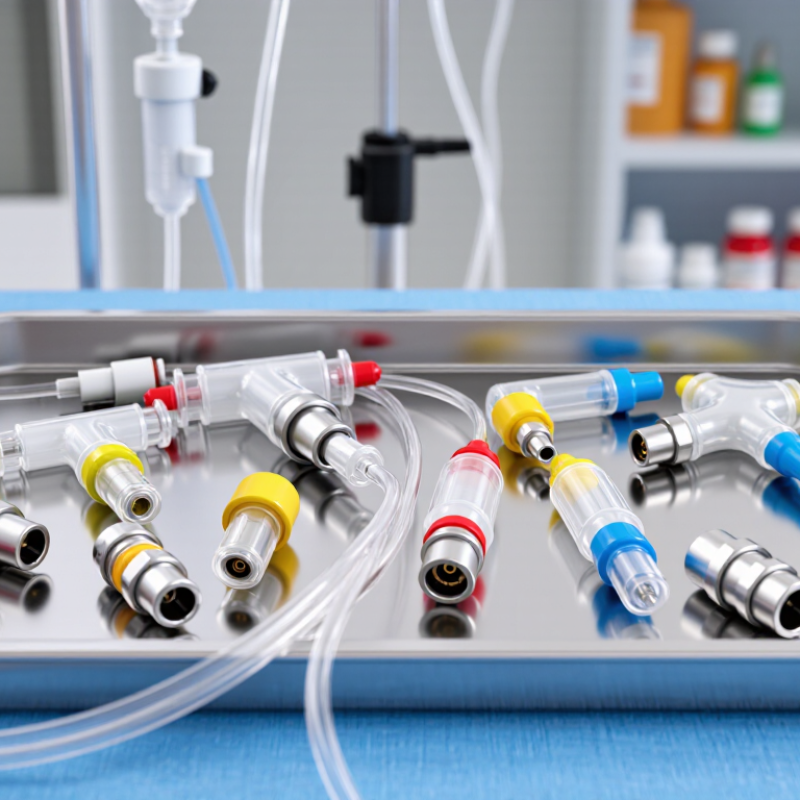
2026 Top Types of Medical IV Sets and Connectors for Buyers

2026 Medical IV Set Taxonomy: ISO 8536-4 Components and Use Cases

The 2026 medical IV set taxonomy begins with ISO 8536-4. It classifies single-use, gravity-fed infusion sets and their functional components. A typical set includes a spike, protective cap, drip chamber, fluid pathway, clamp, injection site, and distal connector. Each part serves a practical purpose. The drip chamber supports visual flow checks, while the clamp controls delivery during line changes.

Connector selection needs separate attention. ISO 8536-4 describes infusion-set performance, but it does not replace connector standards such as ISO 80369-7 for small-bore luer connections. Buyers should verify compatibility between the distal connector, catheter, extension line, and needleless access device. A secure fit matters. So does dead-space volume, because residual medication may affect dosing in low-flow therapy. Filters, vented spikes, and backflow-prevention features suit different use cases, not every ward.

Clinical risk makes this taxonomy more than a purchasing chart. The WHO Global Report on Infection Prevention and Control estimates that healthcare-associated infections affect about 7 in 100 acute-care patients in high-income countries and 15 in 100 in low- and middle-income countries. That figure supports strict attention to sterile packaging, pathway integrity, and handling instructions. In practice, a “standard” set may fail when gravity height, solution viscosity, or patient mobility changes. Buyers should compare flow-rate testing, priming volume, material information, and validation evidence under realistic conditions. The taxonomy helps, but it is not perfect. Real workflows still expose gaps.

Primary IV Sets: Comparing 10, 15, 20, and 60 Drops/mL Configurations

Primary IV sets are commonly defined by their drop factor: 10, 15, 20, or 60 drops/mL. The correct choice affects manual flow control and dosing accuracy. For 500 mL infused over four hours, the approximate rates are 21, 31, 42, and 125 drops per minute. Always check the printed calibration. Drop factors are not interchangeable.

Ten, 15, and 20 drops/mL configurations are generally used when larger drops support faster gravity infusion. A 60 drops/mL set produces smaller drops and supports closer control during low-volume administration. It is often considered for pediatric care, but patient age alone should not determine selection. Prescribed volume, clinical condition, fluid viscosity, and monitoring ability also matter. Small details matter.

From a buyer’s perspective, inspect the chamber visibility, roller clamp response, connector security, tubing flexibility, and leak resistance. The formula remains simple: volume × drop factor ÷ time in minutes. Yet bedside conditions can change results. A partially closed clamp, an elevated container, or a crowded connector may alter the observed rate. In quality reviews, teams should compare labeled calibration with measured performance and confirm compatibility with existing pumps and access devices. I would not treat the cheapest set as the safest choice. That assumption needs evidence.

2026 Top Types of Medical IV Sets and Connectors for Buyers - Primary IV Sets: Comparing 10, 15, 20, and 60 Drops/mL Configurations

Buyer comparison of primary gravity IV administration sets by calibrated drop factor, flow-control characteristics, and commonly specified connector features.

Configuration Nominal Drop Factor Approximate Volume per Drop Example Gravity Rate at 100 mL/hour* Typical Clinical Positioning Flow-Rate Resolution Common Primary-Set Features Connector Considerations Buyer Selection Notes
10 drops/mL
Macrodrip
10 drops per mL Approximately 0.10 mL per drop 16.7 drops/minute
About 1 drop every 3.6 seconds
Gravity infusion when a relatively large drop is acceptable and rapid visual counting is useful. Lowest of the four options. A one-drop change produces a relatively large change in delivered volume. Spike, drip chamber, roller clamp, tubing, injection site or needle-free access point, and distal patient connector. Usually specified with a sterile Luer-compatible patient end; confirm whether the terminal connector is Luer lock or Luer slip. Consider when rapid manual counting and a lower number of drops per minute are preferred. It is less suitable when fine gravity-rate adjustment is important.
15 drops/mL
Macrodrip
15 drops per mL Approximately 0.067 mL per drop 25 drops/minute
About 1 drop every 2.4 seconds
General-purpose gravity administration for compatible IV fluids and routine infusion scenarios. Moderate flow-counting resolution, between 10-drop and 20-drop sets. Spike, calibrated drip chamber, roller clamp, flexible tubing, and a distal Luer-compatible connection. Check Luer connector configuration, tubing internal diameter, clamp design, and compatibility with the intended access device. A practical general-purpose option when the facility commonly calculates gravity rates in drops per minute.
20 drops/mL
Macrodrip
20 drops per mL Approximately 0.05 mL per drop 33.3 drops/minute
About 1 drop every 1.8 seconds
Gravity infusion where more frequent drops provide finer manual adjustment than 10- or 15-drop configurations. Higher resolution than 10- and 15-drop sets, although gravity delivery remains affected by patient position, fluid height, tubing resistance, and clamp setting. Spike, drip chamber, roller clamp, tubing, optional medication-addition or injection access, and terminal patient connector. Specify a secure, standards-compatible Luer connection and verify whether a needle-free valve is required for the access workflow. Useful when staff prefer a finer visual drop count without using a microdrip set.
60 drops/mL
Microdrip
60 drops per mL Approximately 0.0167 mL per drop 100 drops/minute
About 1 drop every 0.6 seconds
Situations requiring finer gravity-rate control, including low-volume or pediatric-focused applications when clinically appropriate. Highest nominal drop-count resolution among the four configurations. It does not replace an infusion pump when highly precise delivery is required. Microdrip chamber, spike, roller clamp, tubing, injection or needle-free access point, and a distal Luer-compatible connector. Confirm compatibility with syringe, extension-line, catheter, and needle-free access components; check dead space when small volumes matter. Choose when fine manual control is valuable. The high drop count requires closer observation and is slower to count manually.

*The example rate uses the standard gravity-infusion calculation: drops/minute = volume in mL/hour × drop factor in drops/mL ÷ 60. Actual performance depends on the set’s validated calibration, fluid properties, temperature, tubing position, fluid-head height, patient access resistance, and roller-clamp adjustment. Always follow the product instructions and applicable clinical protocols.

Specialized IV Sets: Blood, Burette, Filtered, and Light-Protective Designs

Medical IV sets should match the fluid, patient, and treatment environment. Blood administration sets commonly use larger tubing and an integrated filter to reduce visible clots and particulate matter. Confirm the required filter size, tubing volume, and flow capacity before purchasing. A connector must also fit the catheter securely without forcing the connection.

Burette sets support controlled delivery of small fluid volumes, especially when precise measurement matters. Their graduated chamber allows staff to observe the administered amount more clearly.

Filtered IV sets can help manage particulate concerns during infusion, but filtration does not replace proper storage or inspection. Check priming instructions carefully. Small details matter.

Light-protective sets use tinted or opaque materials to limit exposure to light-sensitive medications and solutions. They are useful when clinical guidance requires protection throughout storage and administration. Buyers should assess connector compatibility, pump performance, tubing length, and packaging integrity. One practical mistake is choosing protection for the container but not the entire fluid path. That gap deserves attention. No design is perfect, so procurement teams should compare product specifications with local protocols, staff handling habits, and patient safety requirements.

IV Connectors Explained: Luer Lock and ISO 80369-7 Compatibility Requirements

Luer lock connectors remain common in medical IV sets because their threaded design helps prevent accidental separation. However, a familiar shape does not prove regulatory compatibility. ISO 80369-7 defines small-bore connectors for intravascular and hypodermic applications, including dimensional, leakage, stress, and misconnections testing requirements. Buyers should request current conformity evidence, not rely on catalog images.

A 2022 World Health Organization report estimated that 7 in 100 acute-care patients in high-income countries acquire at least one healthcare-associated infection. The figure rises to 15 in 100 in low- and middle-income countries. Connector selection cannot solve every infection risk, but secure connections, clean handling, and suitable dead-space control support safer IV practice. Tiny details matter.

During purchasing, check whether the connector is intended for ISO 80369-7 applications and whether the full IV assembly has been validated together. Review material compatibility with common medications, pressure resistance, leak testing, and sterilization records. A connector may fit physically yet perform poorly under repeated access. I would not treat a satisfying click as proof of safety. That assumption is easy. It is also incomplete. Recent medical-device market analyses continue to identify IV access products as a growing segment, but forecasts vary widely by region and methodology. Buyers should compare the underlying definitions before trusting any market figure.

2026 Top Types of Medical IV Sets and Connectors for Buyers

IV Connectors Explained: Luer Lock and ISO 80369-7 Compatibility Requirements

The chart shows the numeric designation of each application-specific part in the ISO 80369 connector family. The part number is an identifier, not a performance ranking. ISO 80369-7 covers small-bore connectors for intravascular and hypodermic applications, including Luer-type connections.

Primary IV Sets

Designed for continuous infusion from a fluid container to a vascular access device.

Secondary IV Sets

Used to deliver intermittent medication through a primary infusion line.

Burette Sets

Include a calibrated chamber for controlled-volume administration.

Blood Administration Sets

Use blood-compatible tubing and commonly include an in-line filter.

Buyer checklist: Confirm whether the product uses Luer lock or Luer slip, verify ISO 80369-7 applicability for intravascular or hypodermic connections, check the intended fluid path, and ensure that components from different application-specific connector systems are not mixed. A Luer lock uses threads to resist accidental disconnection; a Luer slip relies on a friction fit and does not provide the same locking function.

Buyer Verification: FDA 510(k) Records, CDC Practices, and Supplier Data

2026 Top Types of Medical IV Sets and Connectors for Buyers

Buying medical IV sets and connectors requires more than comparing prices and package photos. Verify the device type, intended use, fluid path, connector design, priming volume, and compatibility with existing pumps. FDA 510(k) records can confirm substantial equivalence, but a clearance record does not replace product-specific review. Check the exact model, accessories, labeling, and indications. A mismatch between the listed device and supplied configuration can create avoidable risk.

CDC practices should guide evaluation of aseptic handling, single-use policies, disinfection, and catheter-access procedures. Ask suppliers for current instructions for use, sterilization details, lot traceability, shelf life, and packaging-integrity data. Supplier quality records also matter. Review audit results, complaint trends, corrective actions, and certificates from qualified testing laboratories. Public documents are useful, but they may be incomplete.

Tips: Request the FDA record number, full technical file, sample units, and batch documents before approval. Test connector fit with your actual pumps, syringes, and extension lines. Inspect seals under normal storage conditions. Keep a written verification trail.

One detail is often missed: connector convenience can hide cleaning limitations. A reliable purchase decision needs clinical feedback, not only a polished catalog. Recheck assumptions when the supplier changes materials, packaging, or manufacturing sites.

FAQS

What does a primary IV set’s drop factor mean?

It shows how many drops equal one milliliter. Common options are 10, 15, 20, and 60 drops/mL.

How many drops per minute are needed for 500 mL over four hours?

Approximate rates are 21, 31, 42, and 125 drops per minute. Check the printed calibration every time.

Are different drop factors interchangeable?

No. Each calibration changes the manual flow rate. Using the wrong set can affect dosing accuracy.

When is a 60 drops/mL set considered?

It creates smaller drops for closer control during low-volume administration. Patient age alone should not decide selection.

What should guide IV set selection?

Consider prescribed volume, fluid viscosity, clinical condition, monitoring ability, and compatibility with access devices.

How is a manual drip rate calculated?

Use this formula: volume × drop factor ÷ time in minutes. Bedside conditions can still change the observed rate.

What details should buyers inspect before choosing a set?

Check chamber visibility, clamp response, connector security, tubing flexibility, leak resistance, and package integrity. Small details matter.

What are specialized sets used for?

Blood sets may include filters and larger tubing. Burette sets measure small volumes. Filtered sets address particulate concerns.

Why are light-protective sets used?

Tinted or opaque tubing limits light exposure for sensitive fluids. Protection should cover the entire fluid path, not only the container.

Is the least expensive IV set the safest choice?

Not necessarily. Compare specifications, measured performance, local protocols, and staff handling habits. That assumption needs evidence.

Conclusion

Medical IV Sets and Connectors are essential components in safe and efficient intravenous therapy, and selecting the right configuration requires an understanding of both design and clinical purpose. This overview introduces a practical taxonomy based on ISO 8536-4 components and common use cases. Primary IV sets are compared by drip rate, including 10, 15, 20, and 60 drops per milliliter, helping buyers match fluid delivery precision to patient and treatment needs. Specialized options include blood administration sets, burette sets for measured infusions, filtered sets for reducing particulate risks, and light-protective designs for sensitive solutions.

The article also explains IV connector choices, with attention to Luer Lock designs and ISO 80369-7 compatibility requirements. For purchasing decisions, buyers should verify applicable FDA 510(k) records, review relevant CDC-informed practices, and request complete supplier data covering materials, sterility, packaging, performance, and intended use. A structured evaluation can improve product consistency, compatibility, and patient-care reliability.

Sofia

Sofia

Sofia is a proficient marketing professional with a deep-seated expertise in the company’s product offerings. With a keen understanding of market trends and consumer needs, she plays a critical role in defining and promoting the company's core business strategies. Sofia is dedicated to sharing her......