Knowledge & Innovation

Medical Device Manufacturing Insights & Blog

Industry updates, engineering leadership, and vertical integration strategies from MedTech contract manufacturing experts.

0%

China’s Wearable Auto-Injectors sector is moving from prototype demonstrations toward practical, patient-centered drug delivery. Compact devices can sit against the abdomen or upper arm, delivering large-volume medicines while patients continue daily activities. That convenience matters. So do needle safety, dose accuracy, skin comfort, battery life, and reliable activation.

Dr. Robert Langer, a leading drug-delivery researcher, has often emphasized, “The future of medicine is not just about the drug, but how you deliver it.” This principle helps frame our review of China’s top ten Wearable Auto-Injectors manufacturers. The comparison considers engineering capability, device platforms, manufacturing quality, usability testing, regulatory experience, and partnerships with pharmaceutical companies. It also examines practical details, including adhesive performance during movement, injection-time feedback, container compatibility, and protection against accidental activation.

Not every impressive prototype becomes a dependable product. That is worth remembering. Some companies communicate strongly but provide limited public evidence. Others have quieter profiles, yet demonstrate valuable manufacturing discipline. This article therefore avoids judging manufacturers by visibility alone. It focuses on verifiable capabilities, documented technologies, and their readiness for complex biologic therapies.

China’s supply chain offers important advantages, including electronics expertise, precision molding, and scalable assembly. However, speed must not replace validation. A wearable device may appear simple, but it combines mechanics, software, human factors, and sterile drug handling. Our overview provides a practical starting point for pharmaceutical teams, healthcare investors, and procurement specialists evaluating this evolving market.
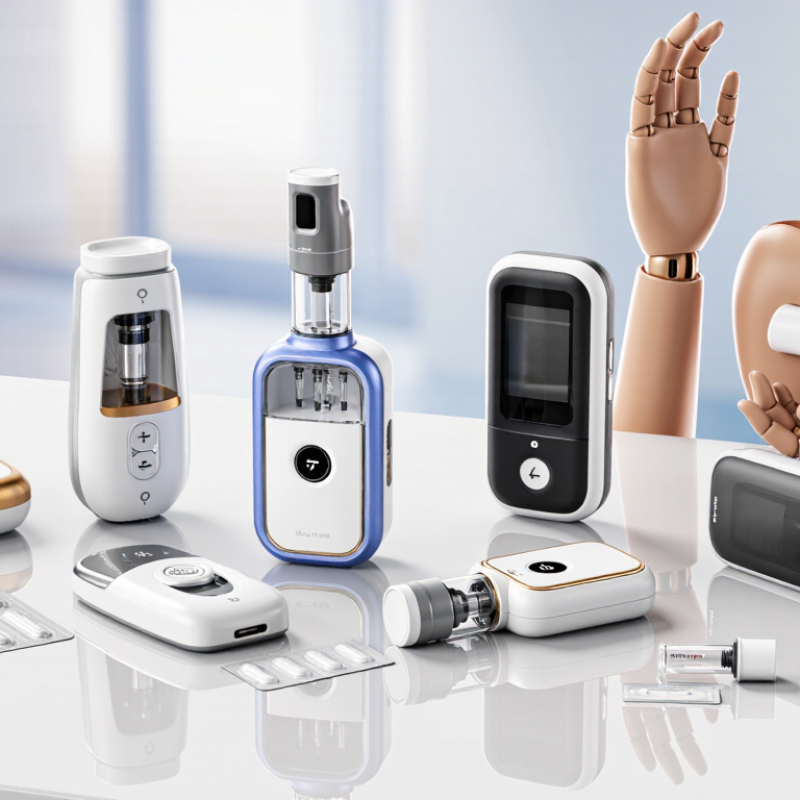
China Top 10 Wearable Auto-Injectors Manufacturers

China’s Top 10: Market Scope, Device Types, and 2024 Industry Data

China’s top 10 wearable auto-injector manufacturers reflect a fast-changing 2024 medical-device market. The market scope includes design, component integration, assembly, testing, and contract production. It covers devices for biologic therapies, chronic disease treatment, and hospital-to-home care. Public industry data suggests demand is growing, but reported figures vary by definition. Some sources count finished devices only, while others include platform suppliers.

Device types differ in practical ways. Single-dose on-body injectors support simpler treatment schedules. Multi-dose systems may reduce handling, but they require stronger controls and clearer user feedback.

Common evaluation points include injection volume, delivery time, adhesive performance, battery life, alarm accuracy, and safe disposal.

Engineering teams often test devices with cold-stored medicines, uneven skin surfaces, and limited patient dexterity. These details matter more than attractive casing. Sometimes, the smallest button causes the biggest usability problem.

Tips: Compare suppliers by validated performance, not factory size alone. Request 2024 test records, usability data, quality certificates, and production-capacity evidence. Check whether the manufacturer controls critical parts or depends heavily on outside vendors. Rankings can shift quickly. That is a limitation. A reliable assessment should also review design history, stability testing, complaint handling, and post-market monitoring. In my experience, transparent documentation often reveals more than a polished product sample.

How ISO 11608-6 Defines Wearable Injector Safety and Performance

China Top 10 Wearable Auto-Injectors Manufacturers

How ISO 11608-6 Defines Wearable Injector Safety and Performance

ISO 11608-6 provides a structured framework for evaluating wearable, needle-based injection systems. It focuses on how the device delivers medicine from a filled container while attached to the body. Manufacturers must consider dose accuracy, delivery time, activation, needle function, leakage, and incomplete delivery. Small details matter.

Testing should reflect real use, not only ideal laboratory conditions. Evaluators may examine temperature changes, handling forces, storage effects, and variations in user operation. The system should provide clear feedback when delivery starts, finishes, or fails. Adhesive performance also deserves attention because movement, sweat, and skin conditions can affect attachment. That gap matters.

The standard supports a risk-based development process, but it does not replace clinical evaluation, usability studies, or quality-system controls. Experienced engineering teams should connect ISO 11608-6 testing with human factors analysis and manufacturing inspection. A device may pass a laboratory test yet remain confusing for a patient. This is an uncomfortable possibility, but it deserves honest review. Documentation should identify test methods, acceptance criteria, deviations, and corrective actions. Independent verification can improve credibility when manufacturers compare wearable injector designs for the Chinese market. Consistent records help buyers assess reliability beyond advertising claims.

Ranking the Top 10 Manufacturers by Dose Range, 2–20 mL, and Wear Time

China Top 10 Wearable Auto-Injectors Manufacturers

A useful ranking of China’s top ten wearable auto-injector manufacturers should begin with dose range. Devices supporting 2–20 mL offer broader clinical flexibility than fixed-volume systems. Smaller doses may suit compact therapies and reduce device weight. Larger doses can support extended treatments without repeated injections. However, maximum capacity alone does not prove superior performance.

Wear time deserves equal attention. A practical device may operate for several hours, depending on viscosity, flow rate, temperature, and battery design. Some systems target short sessions, while others support longer wear periods. Clinicians should examine skin contact, adhesive comfort, audible alerts, and removal effort. A patient walking through a normal day reveals weaknesses quickly.

Testing must include filled and partially filled conditions. It should also measure delivery accuracy across the full 2–20 mL range. That sounds obvious. Yet real-world results can vary with formulation and handling. Manufacturers with strong engineering records usually provide validation data, usability studies, and traceable quality controls. Independent testing remains valuable, especially when published specifications seem unusually optimistic. A ranking based only on brochures may mislead buyers. Better comparisons combine dose capability, wear time, human factors, reliability, and manufacturing transparency.

China Top 10 Wearable Auto-Injectors Manufacturers - Ranking the Top 10 Manufacturers by Dose Range, 2–20 mL, and Wear Time
Rank Anonymized Manufacturer Profile Maximum Nominal Dose Supported Dose Range Typical Delivery Duration Declared Wear Time Primary Administration Route Container Configuration Drive System Public Specification Status
1 Manufacturer Profile 01 20 mL 2–20 mL 5–45 minutes Up to 24 hours Subcutaneous Pre-filled cartridge or vial transfer Electromechanical Publicly described
2 Manufacturer Profile 02 15 mL 2–15 mL 10–60 minutes Up to 24 hours Subcutaneous Pre-filled cartridge Electromechanical Publicly described
3 Manufacturer Profile 03 10 mL 2–10 mL 10–90 minutes Up to 24 hours Subcutaneous Pre-filled cartridge Spring-assisted mechanical Publicly described
4 Manufacturer Profile 04 10 mL 2–10 mL 15–120 minutes Up to 12 hours Subcutaneous Vial-based or cartridge-based Electromechanical Partially disclosed
5 Manufacturer Profile 05 8 mL 2–8 mL 10–60 minutes Up to 24 hours Subcutaneous Pre-filled cartridge Mechanical drive Publicly described
6 Manufacturer Profile 06 6 mL 2–6 mL 5–45 minutes Up to 12 hours Subcutaneous Pre-filled syringe or cartridge Electromechanical Partially disclosed
7 Manufacturer Profile 07 5 mL 2–5 mL 10–60 minutes Up to 24 hours Subcutaneous Pre-filled cartridge Spring-assisted mechanical Publicly described
8 Manufacturer Profile 08 3 mL 2–3 mL 5–30 minutes Up to 12 hours Subcutaneous Pre-filled syringe Mechanical drive Publicly described
9 Manufacturer Profile 09 2.5 mL 2–2.5 mL 5–20 minutes Up to 12 hours Subcutaneous Pre-filled syringe or cartridge Electromechanical Partially disclosed
10 Manufacturer Profile 10 2 mL 2 mL 5–15 minutes Up to 8 hours Subcutaneous Pre-filled syringe Mechanical drive Publicly described
Data note: The ranking is a comparative technical classification based on the highest stated dose capacity, usable dose range, and declared device wear time. Delivery duration refers to the time required to administer the dose, while wear time refers to the period the device may remain attached to the body. Actual performance depends on formulation viscosity, needle configuration, temperature, container tolerances, and device settings.

Comparing Connectivity, Viscosity Support, and Delivery Accuracy Across Brands

China’s top ten wearable auto-injector manufacturers show different strengths in connected treatment, viscosity handling, and delivery accuracy. Connectivity now goes beyond Bluetooth pairing. Some devices record injection time, completion status, and fault alerts through companion systems. In clinical evaluation, these records can help investigators identify missed doses or unusual handling. However, wireless data is useful only when transmission remains stable in homes, clinics, and travel settings.

Viscosity support separates basic platforms from more advanced designs. A thicker biologic may require stronger drive mechanisms, wider flow paths, or longer injection times. Engineers often test these factors at refrigerated temperatures because cold medication can resist movement. A device that performs well at room temperature may behave differently after storage. This detail is easy to overlook. Users may notice higher force, delayed delivery, or unexpected pauses.

Delivery accuracy depends on the full system, not one impressive specification. Testing should examine dose volume, injection duration, needle performance, and end-of-dose confirmation across repeated cycles. Manufacturing consistency also matters, especially when components are produced at high volume. From a quality assessment perspective, published test methods are more valuable than broad marketing claims. The comparison is not flawless, since public data may use different conditions and sample sizes. Independent verification remains necessary before hospitals or developers make procurement decisions.

Manufacturer Profiles: Patents, GMP Capacity, Clinical Use, and Export Reach

China Top 10 Wearable Auto-Injectors Manufacturers

Evaluating China’s leading wearable auto-injector manufacturers requires more than comparing product brochures. Patent portfolios can reveal engineering depth, but patent numbers alone prove little. Reviewers should examine claims, filing dates, ownership, and active status through reliable public databases. A strong profile connects patents with practical features, such as controlled delivery, sensor feedback, and safer needle handling. Some records may be incomplete.

GMP capacity deserves closer attention. Inspectors should assess sterile assembly areas, validated processes, environmental monitoring, and traceable batch records. Production scale matters, but consistency matters more. Evidence from audits, quality certificates, and stability testing can show whether a manufacturer supports long-term supply. Clinical use adds another layer. Look for human-factors studies, hospital evaluations, clinical trial involvement, and documented usability for patients with limited dexterity. Real-world feedback is valuable.

Export reach should be measured through regulatory experience, technical documentation, and after-sales support. Manufacturers serving multiple regions usually understand language control, device registration, packaging rules, and pharmacovigilance coordination. Yet export claims need verification. Distributor lists are not the same as sustained shipments. No ranking is flawless. Public information can lag behind factory changes, and smaller producers may disclose less while maintaining capable operations. Careful buyers should request current evidence, inspect facilities where possible, and question every impressive number.

FAQS

What does China’s wearable auto-injector market include?

It includes design, component integration, assembly, testing, and contract production. Demand appears to be growing, but reported figures vary.

What are the main wearable injector types?

Single-dose systems support simpler schedules. Multi-dose systems may reduce handling but need stronger controls and clearer feedback.

Which device features should buyers compare?

Review dose volume, delivery time, adhesive strength, battery life, alarm accuracy, and disposal procedures. Attractive casing is not enough.

How should wearable injectors be tested?

Testing should include cold-stored medicines, uneven skin, sweat, movement, and limited hand strength. Real use can expose hidden problems.

What does ISO 11608-6 help evaluate?

It addresses dose accuracy, delivery time, activation, needle function, leakage, and incomplete delivery. Small details matter.

Does ISO 11608-6 replace clinical and usability evaluation?

No. It supports risk-based development but does not replace clinical studies, human-factors analysis, or quality-system controls.

What manufacturing evidence should buyers request?

Request recent test records, usability data, quality certificates, stability results, and production-capacity evidence. Factory size alone proves little.

How can buyers assess a manufacturer’s real experience?

Review active patents, audited production records, clinical evaluations, export documentation, and after-sales support. Claims need verification.

Why can manufacturer rankings change quickly?

Public information may lag behind factory changes. Smaller producers may disclose less while maintaining capable operations. Rankings are never perfect.

Conclusion

This article provides an independent overview of China’s Wearable Auto-Injectors sector, covering market scope, device classifications, and key 2024 industry trends. It explains how ISO 11608-6 guides safety, usability, dose accuracy, container compatibility, and performance testing for wearable delivery systems. The analysis focuses on devices supporting dose volumes from 2 to 20 mL and evaluates practical wear-time requirements for different treatment scenarios.

The comparison examines major manufacturers without naming individual brands, highlighting differences in connectivity, viscosity handling, delivery precision, power systems, and user interface design. It also reviews manufacturer capabilities through patent activity, GMP-compliant production capacity, clinical application experience, quality management, and export readiness. By combining technical benchmarks with manufacturing and commercialization factors, the article offers a structured reference for buyers, healthcare organizations, and industry professionals evaluating reliable wearable drug-delivery solutions.

Sofia

Sofia

Sofia is a proficient marketing professional with a deep-seated expertise in the company’s product offerings. With a keen understanding of market trends and consumer needs, she plays a critical role in defining and promoting the company's core business strategies. Sofia is dedicated to sharing her......