Medical Device Manufacturing Insights & Blog
Industry updates, engineering leadership, and vertical integration strategies from MedTech contract manufacturing experts.
How to Choose UHMWPE Medical Components?
Table of Contents
- Define the Component’s Medical Function and Operating Conditions
- Select the Appropriate UHMWPE Grade and Material Properties
- Match Component Geometry to Manufacturing and Design Requirements
- Evaluate Sterilization, Wear, and Biocompatibility Needs
- Verify Supplier Quality, Testing, and Regulatory Documentation
- FAQS
- Conclusion
- Related Posts
Choosing UHMWPE Medical Components is not just a material-selection exercise. The right choice depends on the component’s role, contact conditions, expected service life, and manufacturing process. A bearing surface in a joint replacement faces different demands from a guide, spacer, or other medical part. Small details matter: a sharp edge, a tight tolerance, or repeated loading can change performance. The label alone is not enough.
Start with the application. Define the loads, motion, temperature range, and contact environment as clearly as possible. Then compare material grades using current technical data, including mechanical properties, cleanliness controls, and available traceability. Ask how the material is machined and finished. A smooth-looking surface may still contain marks that affect wear or cleaning. Request evidence, not just assurances. Test results are useful only when their methods and conditions resemble the intended use.
Sterilization also deserves early attention. Different methods can affect material properties, so confirm compatibility for the specific grade and process. Review supplier documentation, lot identification, and quality controls, then evaluate the finished component—not only the raw resin. That sounds straightforward. It isn’t always. A promising datasheet cannot replace application-specific testing, and one material choice rarely resolves every design trade-off. The device manufacturer remains responsible for assessing the component within the complete device and its validated processes. A careful selection process may take longer, but it makes assumptions visible. That is a practical place to begin.
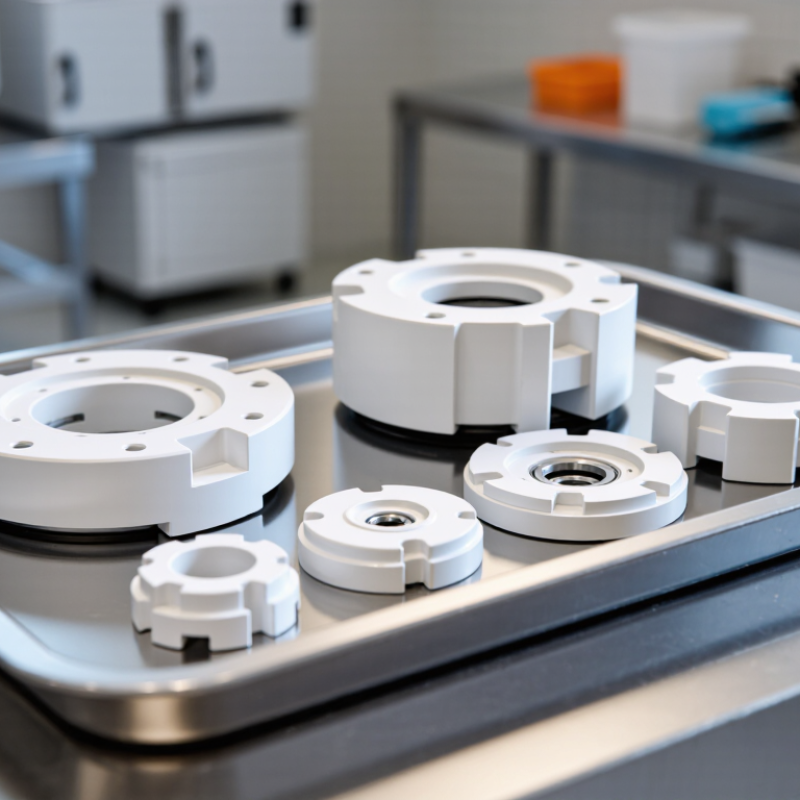
Define the Component’s Medical Function and Operating Conditions
How to Choose UHMWPE Medical Components?
Define the Component’s Medical Function and Operating Conditions
Start with the part’s job. A joint-replacement bearing faces repeated compression, sliding contact, and body fluids; a surgical instrument component may face different loads and cleaning cycles. Specify whether the part is implantable, how long it remains in use, and which surfaces contact tissue or other materials. Then define peak load, motion, temperature, and sterilization method. Small details matter: a sharp edge or uneven contact can concentrate stress. A polished drawing is not enough.
The American Joint Replacement Registry’s 2023 Annual Report recorded 3,712,834 hip and knee procedures from 2012 through 2022. That scale shows how varied joint-replacement use is, but it does not establish that one UHMWPE grade suits every component. Compare candidate materials against the relevant requirements in ISO 5834-2, then validate wear and strength under conditions that represent the intended use. Don’t overlook sterilization: processing can affect oxidation and long-term performance. Test assumptions, especially when the actual use environment is hard to reproduce.
Select the Appropriate UHMWPE Grade and Material Properties
For load-bearing components, choose UHMWPE by its intended contact, sterilization route, and expected loading—not by the grade label alone. ASTM F648 and ISO 5834-2 provide recognized specifications for implant-grade material and molded forms. Check the supplier’s batch data for oxidation stability, tensile strength, and elongation; then confirm the finished part retains those properties after machining and sterilization. Small details matter. A sharp edge or rough counterface can accelerate wear, even when the resin itself meets specification.
Wear data can help frame the choice. A published meta-analysis of hip-replacement studies reported lower linear wear for highly crosslinked UHMWPE than for conventional UHMWPE, with approximate rates of 0.04 versus 0.14 mm per year. These values are study averages, not predictions for every component. Crosslinking can improve wear resistance, but may reduce fatigue strength; vitamin E stabilization is another option for limiting oxidation. Match these trade-offs to the actual load and geometry. I would still test the finished design under relevant conditions. A material certificate cannot capture every real-world contact pattern, and that limitation is easy to overlook.
Match Component Geometry to Manufacturing and Design Requirements
UHMWPE component geometry should fit both its clinical function and its manufacturing route. A broad, flat bearing surface may be straightforward to machine, while a deep narrow channel can complicate tool access and chip removal. Thin walls and sharp internal corners may also distort during machining or create stress concentrations. These details affect achievable tolerances, surface finish, and inspection. Small details matter.
Tips: Share a dimensioned drawing early. Mark critical surfaces, tolerances, and expected loads. Ask the manufacturer which features need relaxed tolerances or a different machining sequence.
For a guide, spacer, or liner, map the contact areas and movement before fixing the shape. UHMWPE can deform under sustained load, so wall thickness and unsupported spans deserve careful review. A close-fitting feature may look precise on screen but become difficult to manufacture consistently. Consider how the part will be cleaned, assembled, and inspected, too. These steps can influence openings, edges, and accessible surfaces. One common design weakness is treating every dimension as equally important. It is not. Prioritize the interfaces that affect fit and function, then verify the proposed geometry with manufacturing and quality teams. Revise the drawing when practical feedback reveals a problem; the first version is not always the best one.
Evaluate Sterilization, Wear, and Biocompatibility Needs
How to Choose UHMWPE Medical Components?
Evaluate sterilization, wear, and biocompatibility for the component’s actual use. Start with the intended sterilization method and cycle. Steam, radiation, and chemical processes can affect polymer properties differently. Repeated exposure may change strength, color, or dimensions, so test representative parts after the full planned cycle count. Check the finished component, not only raw material data. Small details matter. A thin wall or tight fit may respond differently from a large test sample.
Wear needs depend on contact surfaces, load, movement, and lubrication. Review test conditions that resemble real use, including abrasive particles or repeated motion where relevant. UHMWPE is valued for wear resistance, but performance varies with processing, design, and operating conditions. Do not assume a material name guarantees a service life. Biocompatibility review should cover the final device, its processing residues, and any sterilization-related changes. Ask suppliers for traceable material and test records, then confirm suitability through the device’s risk assessment and applicable evaluation process. This takes effort. It can also reveal gaps early. A qualification plan may need revision when the intended use or cleaning process changes.
Verify Supplier Quality, Testing, and Regulatory Documentation
Choosing UHMWPE medical components starts with the supplier’s evidence, not a polished brochure. Ask for resin grade, lot traceability, change-control records, and inspection results tied to the actual component. ISO’s 2022 Survey counted 1,265,216 valid ISO 9001 certificates worldwide. That figure reflects broad adoption, not proof that a supplier’s process fits your device. Review the scope, audit history, and corrective-action records. A certificate alone is not enough.
Testing should match intended use. Request documented methods and acceptance criteria for dimensions, cleanliness, mechanical performance, and sterilization compatibility, where relevant. For implant applications, ask how material and processing choices relate to applicable biological evaluation requirements, such as ISO 10993. FDA’s Quality Management System Regulation took effect on February 2, 2026, aligning U.S. device quality requirements more closely with ISO 13485:2016. Check that the supplier’s quality documentation reflects current requirements and supports your own design and risk records. Paperwork can look complete and still miss the detail that matters.
Tips: Request a sample lot packet before approval. Check that material certificates, inspection results, and revision numbers match the same part and production lot. If a test result seems unclear, ask for the method and raw data. One awkward question now may prevent a costly assumption later.
FAQS
Define its function, intended use time, contact surfaces, peak load, motion, temperature, and sterilization method. Small details matter.
No. A joint bearing and an instrument component face different loads, contact, and cleaning conditions. Validate materials for the intended use.
Sharp edges and uneven contact can concentrate stress. A polished drawing alone cannot show how the part will perform.
Deep channels may limit tool access and chip removal. Thin walls can distort, while tight tolerances may be difficult to inspect consistently.
Yes. Review wall thickness and unsupported spans, especially in guides, spacers, and liners. A close fit on screen may not work in practice.
Request the resin grade, lot traceability, change records, and inspection results for the actual component. Check matching revision numbers.
Ask for documented methods and acceptance criteria covering dimensions, cleanliness, mechanical performance, and sterilization compatibility when relevant. Request raw data if results seem unclear.
Confirm the intended method early. Processing can affect oxidation and long-term performance, so test materials under representative conditions.
No. Review its scope, audit history, corrective actions, and component-specific evidence. Paperwork can look complete and still miss a detail.
Conclusion
Choosing UHMWPE Medical Components begins with understanding the part’s medical function and the conditions it will face, including loads, movement, contact surfaces, and expected service life. These requirements help determine the appropriate UHMWPE grade and material properties, such as strength, wear resistance, and dimensional stability. Component geometry should also suit the intended design and available manufacturing processes, supporting reliable production and consistent performance.
Before selection is finalized, assess how sterilization methods may affect the material, along with wear behavior and biocompatibility requirements for the intended application. Review the supplier’s quality controls, test results, and regulatory documentation to confirm that the material and finished component meet the project’s specifications. Considering these factors together helps create a practical, well-supported component selection that balances performance, safety, and manufacturability.

Blog Tags: